Security concepts that support your investment decision.
What needs to change, what can stay and what will it cost to operate? We compare the current situation, targeted improvements and an integrated concept — with explicit assumptions and a clear next decision.
As much as needed. Not automatically a new system.
We consider the current situation alongside possible improvements. The right solution must fit your protection objectives, operations and available budget.
01
Keep the existing setup
When current protection is sufficient.
Record running costs, known gaps and accepted residual risk. Agree what would trigger the next review.
02
Improve selectively
When a specific gap needs closing.
Reuse suitable equipment; improve individual zones, alarm rules or response workflows. Separate the investment from additional operating costs.
03
Redesign the approach
When the site or its requirements change substantially.
Assess an integrated concept. Budget for implementation, integration, maintenance, alarm handling and potential disruption together.
Compare more than the purchase price
Include planning and installation, power and connectivity, maintenance and licences, alarm verification and response, and internal effort. Documented losses and downtime add context. Together we identify which costs are known and which still need checking.
Use the template internally or to prepare for a conversation. Unknown information can remain open. This is not a finished security design: it helps you agree a well-founded next decision.
Reason & impact
What has changed? Which damage, checking effort or interruptions are actually documented?
Options & costs
What would keeping the status quo, a targeted improvement or a new concept mean? What does implementation and operation cost?
Responsibility & timing
Who carries the consequences, who contributes to the decision, and what needs to be resolved by when?
We review your reason to act, the operational impact and timing. Together we identify which options merit further assessment, who needs to be involved and what information is still needed.
The outcome: an agreed next step — a direct proposal, a scoped assessment or no purchase for now. Any detailed assessment is agreed separately, including scope, deliverable and fee.
Our references show completed integrations. For your site, we agree suitable acceptance criteria such as detection performance, false-alarm workload and response workflows. This turns a technical solution into a verifiable result.
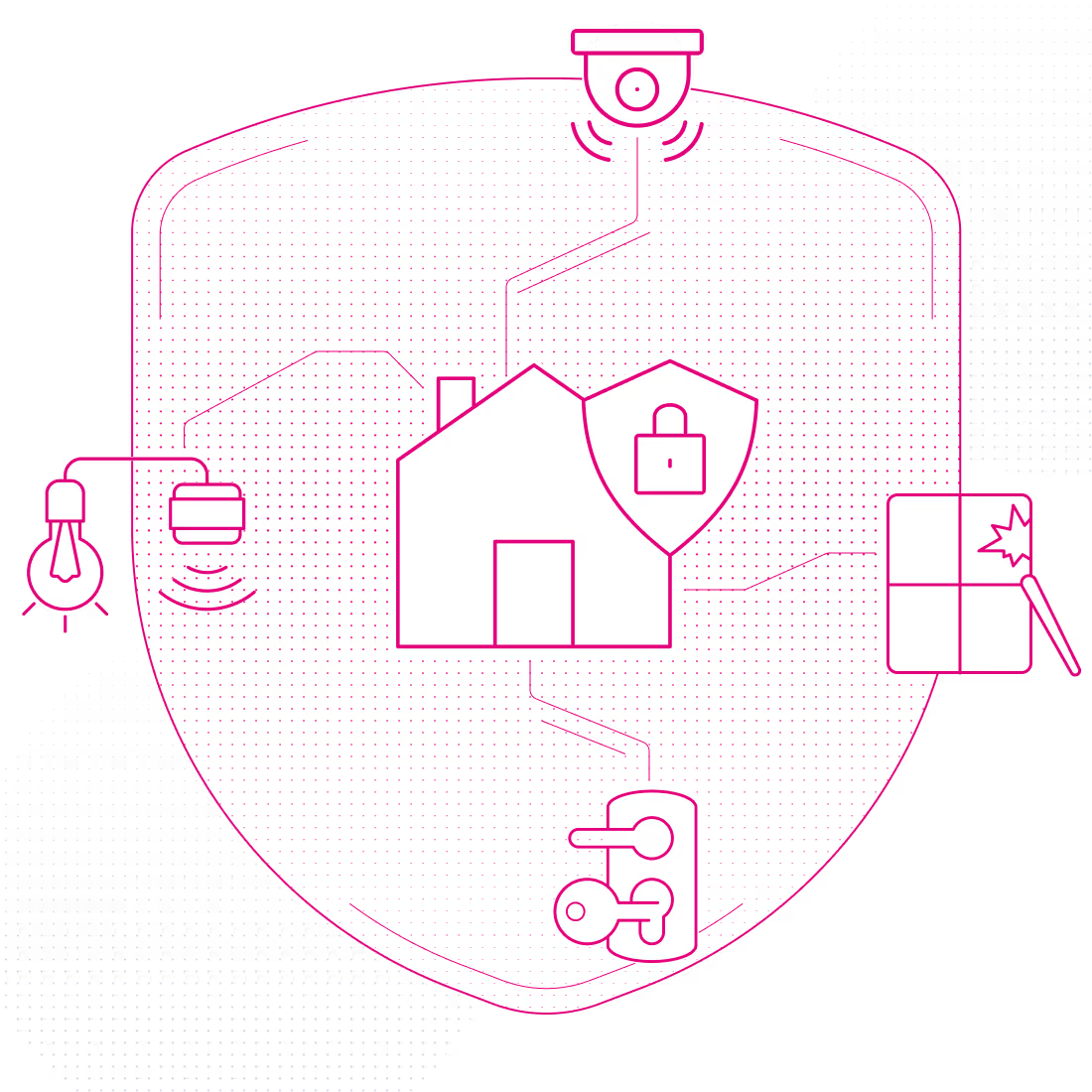
In many facilities, fundamental security measures are already in place—such as high-quality locking systems, mechanical intrusion protection on windows and doors, intruder alarm systems, and motion-activated exterior lighting. We review this baseline and enhance it where needed—for example by integrating central monitoring services. This helps you protect your site cost-effectively and lays the foundation for advanced security solutions. Count on us for optimal protection at a reasonable cost.
Enhanced monitoring
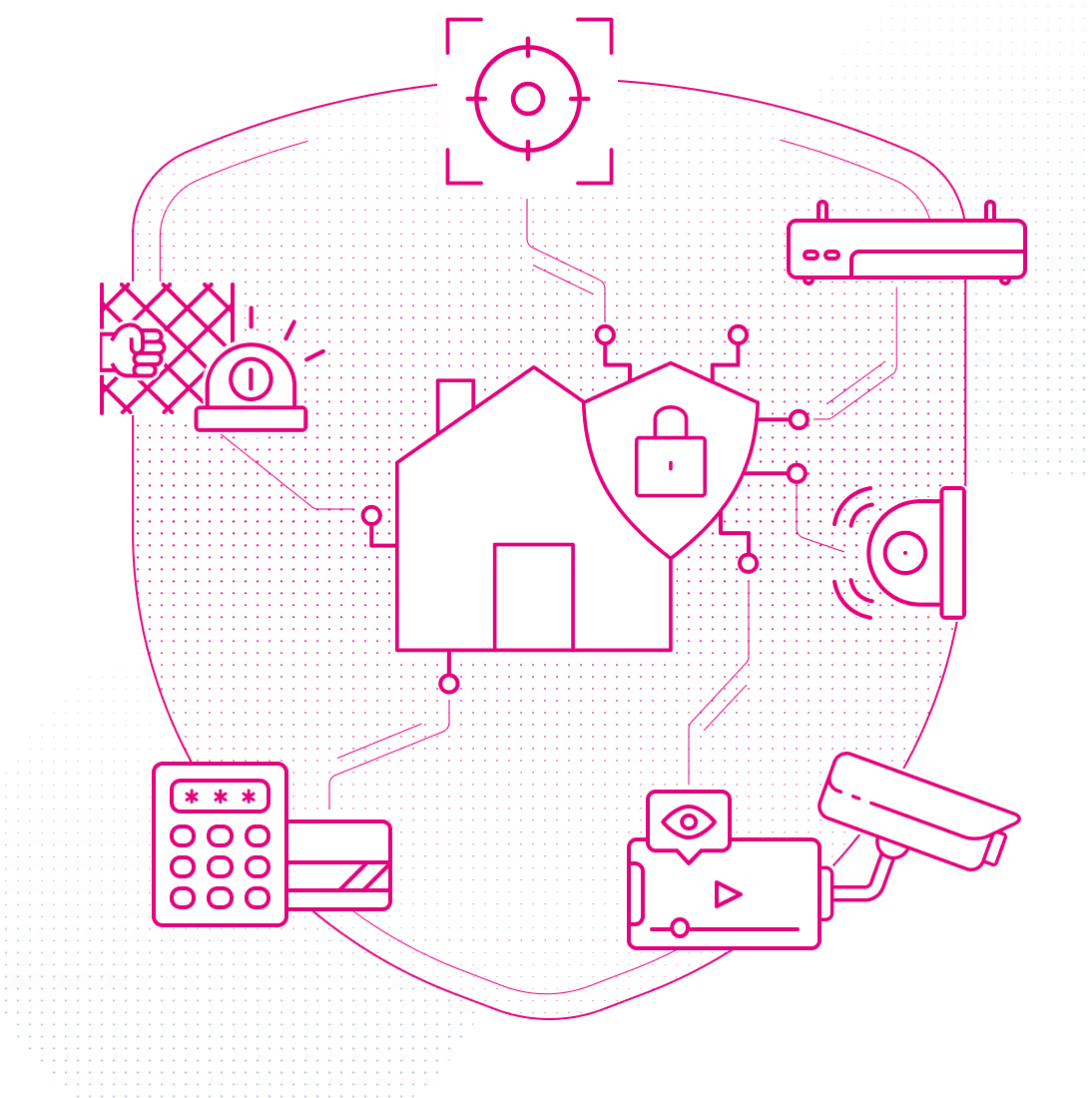
We expand your site protection with IP-camera video surveillance at key points, including recording devices for storage and evidence. If desired, we can integrate remote monitoring options. Electronic access control using transponders, PIN keypads, or smart devices can also be added as needed.
Intelligent monitoring
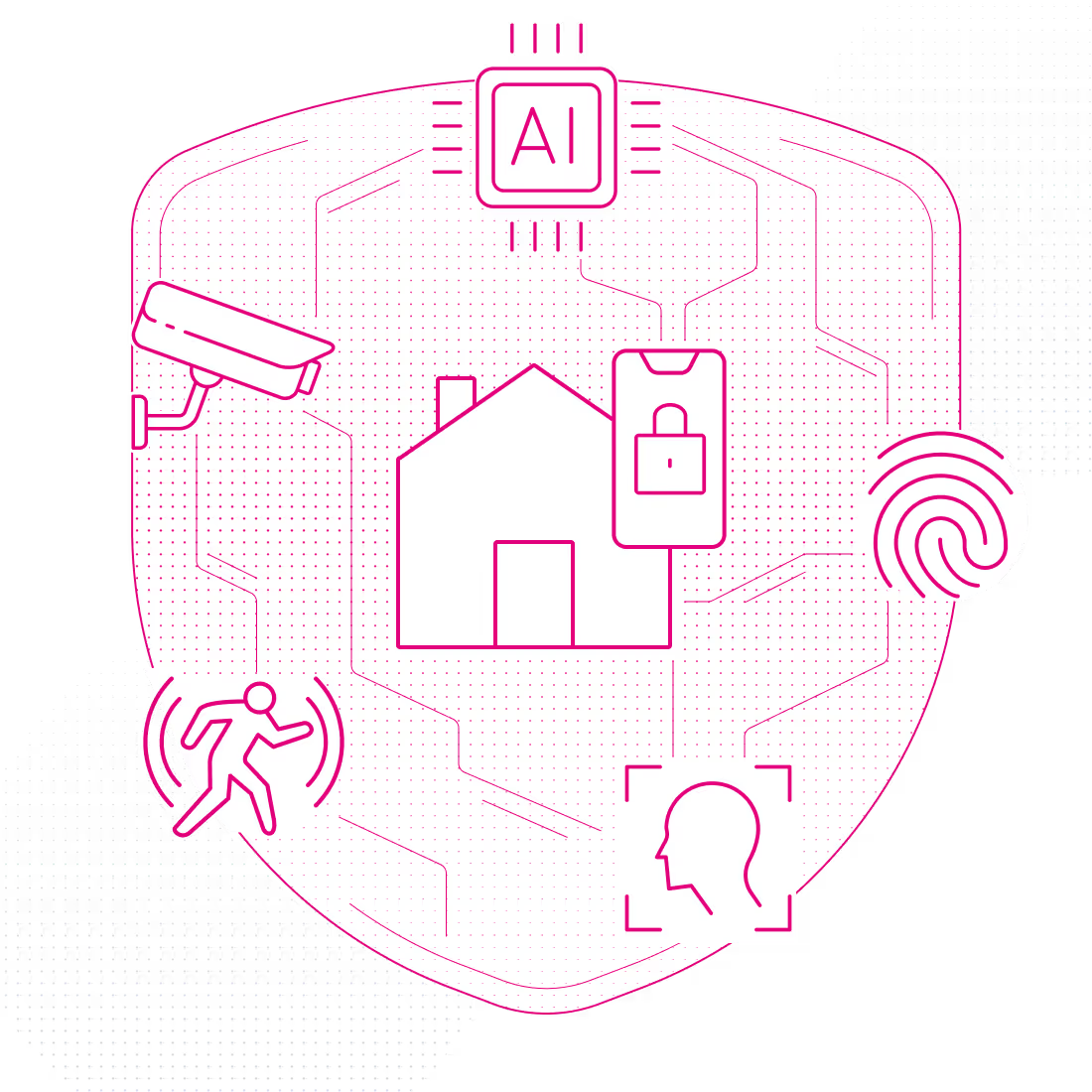
High security requirements call for intelligent systems and comprehensive coverage. We plan proactively with powerful tools to prevent scenarios or enable rapid intervention. Our camera systems use machine learning (ML) for robust analytics under a wide range of conditions. When needed, we deploy intelligent perimeter fence sensors and optimize perimeter protection. We train your monitoring staff or provide our external monitoring centers. Mobile monitoring units, such as camera towers, are used for special requirements.
Fully automated and proactive monitoring
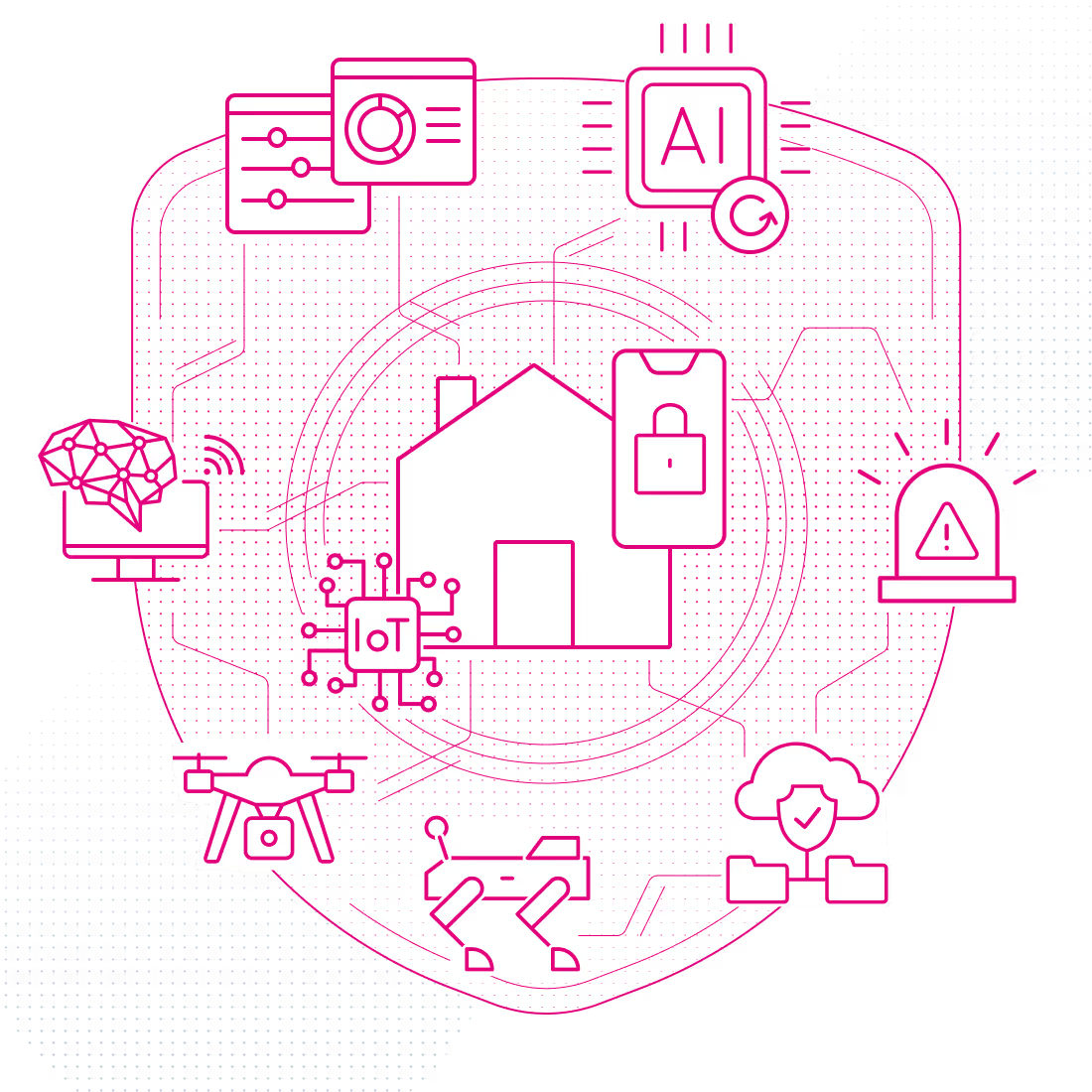
Integrated software platforms are the foundation for consolidating all monitoring systems at your site. Using such platforms enables end-to-end, highly automated processing of relevant event data. At this level, preventing security incidents is the top priority. If needed, we integrate your systems into existing structures or build new infrastructure to intelligently connect building automation components with building monitoring systems. The solution can also be enhanced with robots and drones for intervention or patrols—reducing staffing needs and optimizing response times.
To turn a good concept into a reliable security solution, we follow a clear process—from the initial analysis to ongoing operations.
This is how a project with us works
Phase 1 – Analysis
We develop a precise understanding of your site, your risks, and existing measures. This includes discussions with key stakeholders, reviewing existing documentation, and—where appropriate—an on-site inspection. We document the results in a structured way and derive clear fields of action.
Phase 2 – Concept development
Based on the analysis, we develop a tailored security concept. We define protection objectives, evaluate different technical and organizational options, and create a tiered scenario that fits your budget and priorities. You receive a clear basis for decision-making for the next steps.
Phase 3 – Implementation & testing
In the next step, we support implementation—from detailed planning and selecting suitable components to installation and commissioning. In our test hall and our KNX lab, we can test scenarios in advance and validate interactions. This ensures the solution works in practice.
Phase 4 – Operations & optimization
Even after commissioning, we stay by your side. We support you with maintenance, adjustments, and expansions, and regularly review whether the security level still matches your current risk situation. If needed, we continue to develop your concept together—step by step.
Ready for a well-thought-out security concept?
We’d be happy to discuss where you stand today and which next steps make sense for your site in an initial conversation. On this basis, we develop a concept that fits your requirements—and can be expanded later if needed.