Ambos Security · Concept. Technology. Operation.
Secure outdoor areas. Choose your next step with confidence.
Incidents, false-alarm workload or a contract up for renewal? Together we assess what needs to improve, which equipment can stay and what level of investment makes sense.
For commercial sites · Non-binding initial assessment
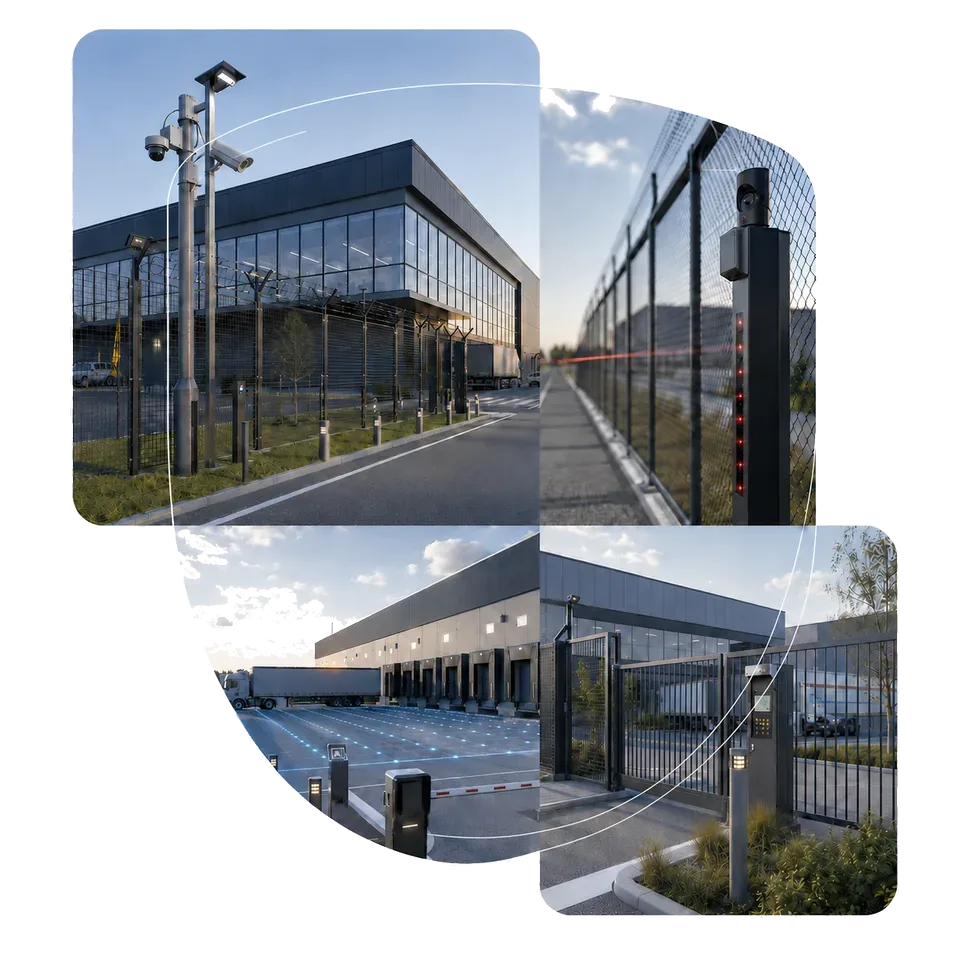
Start with your reason to act
What has changed at your site?
Not every risk calls for new equipment. What matters is the impact on operations and when a decision needs to be made.
Construction or materials arriving
Assets are already on site but permanent infrastructure is not ready. Plan the protection start, interim period and later use together.
Discuss temporary protectionGuarding contract up for renewal
A contract is ending or the workload is rising. Compare duties, response and total costs across personnel and technology options.
Compare your optionsIncidents or frequent false alarms
Damage, interruptions or repeated checks affect operations. Establish causes and actual workload before adding equipment.
Assess existing securitySite-specific, not one-size-fits-all
Technology and operations need to work together.
Identify weak spots
Assess fence lines, entrances, storage areas and blind spots systematically. Incidents and operations determine priorities — not a generic product list.
Connect existing technology
Check cameras, fence sensors, lighting and access control for coverage and interfaces. Reuse suitable existing equipment and close gaps selectively.
Define the response
Verify alarms, assign responsibilities and document escalation. The control room, site staff and response service need a shared workflow.
From initial assessment to reliable operation
- 01
Assess
Capture the area, risks, existing equipment, timeframe and responsible people.
- 02
Plan
Agree protection zones, fields of view, power, connectivity and alarm paths.
- 03
Implement
Agree scope and prerequisites; plan installation and acceptance tests.
- 04
Operate
Test alerts, failures and response; define maintenance and adjustments.
An integrated system, not an isolated product
Security in the context of your site.
ASG plans and integrates security technology. Approved project examples cover a commercial site in Saxony, an industrial semiconductor environment and a security service provider. Scope and applicability are assessed separately for your site.
View project examplesBefore quoting, we clarify
- Reason to act, operational impact and decision date
- Decision participants, budget process and alarm response
- Implementation, running costs and deployment limits
- Privacy, acceptance and failure tests
Answers to support your decision
Which areas do you secure?
Typical deployments include depots, storage and logistics areas, commercial sites, industrial facilities, solar parks and BESS, construction sites, entrances and fence lines. The concept is tailored to the actual site and its operations.
Can existing equipment be integrated?
Often yes. ASG checks condition, coverage, interfaces and versions. Suitable systems are integrated and necessary additions are justified. Naming a manufacturer or protocol does not replace a project-specific integration test.
How do you reduce false alarms?
Weather, vegetation, animals, reflections and incorrectly configured zones are examined as causes. Suitable sensors, time and zone correlation and video verification help identify relevant alerts. Results are checked through documented tests rather than blanket promises.
How does a project start?
With a structured assessment of site type, area, existing equipment, incidents, false alarms and urgency. We then agree protection objectives, responsibilities and the next assessment step before final technical design.
Your next step
What makes sense for your site now?
Describe your site and reason to act. In the initial conversation we clarify the need, practical options and information required for a reliable cost assessment. We discuss who decides and what needs to happen by when.
The outcome is an agreed next step: a proposal, a scoped assessment or no purchase for now. The scope and fee for a detailed assessment are agreed separately.
Not all details known yet? “Unclear” is a useful answer.
Prefer to book a call